

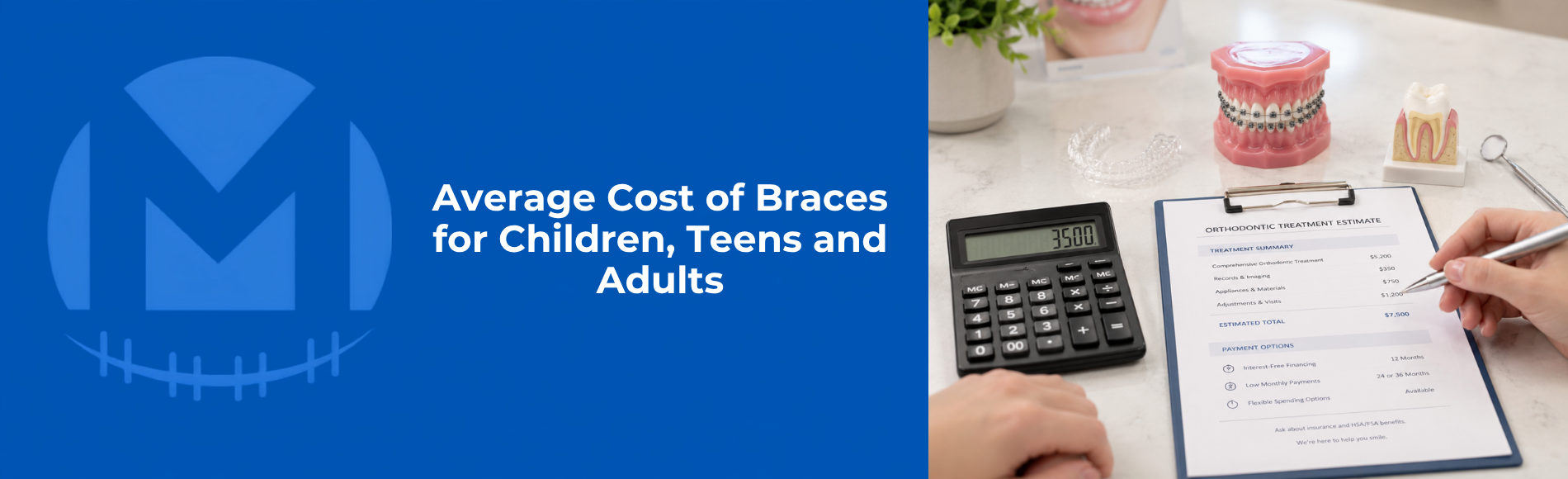

One of the first questions people ask when considering orthodontic treatment is, “How much do braces cost?” It’s an understandable concern. Whether you’re exploring treatment for yourself or your child, understanding the financial commitment helps you plan with confidence.
The truth is that there isn’t a single price for braces. Every smile is different, and treatment recommendations are based on each patient’s individual needs. Factors such as the complexity of the case, the type of braces selected, treatment length, insurance benefits, and financing options all influence the final cost.
While online estimates can provide a general idea, the most accurate way to determine the cost of treatment is through a professional orthodontic evaluation. During a consultation, your orthodontist can assess your bite, discuss treatment options, and provide a personalized estimate based on your specific goals.
How Much Do Braces Cost?
If you’ve searched for “how much do braces cost”, you’ve probably noticed that the answers vary considerably. That’s because orthodontic treatment is highly personalized.
Across the United States, the average cost of braces generally falls between $3,000 and $8,000, although some complex cases may fall outside that range. The final investment depends on the type of treatment recommended, how long treatment is expected to last, and whether additional appliances or procedures are needed throughout the process.
It’s important to remember that online price ranges should only be used as a starting point. A comprehensive orthodontic consultation provides a much clearer picture of what treatment will involve and what costs may apply in your particular case.
What Affects the Cost of Braces?
Several factors determine the total cost of orthodontic treatment, and not all of them are immediately obvious.
The complexity of your bite is one of the biggest considerations. Correcting mild crowding is generally less involved than treating significant spacing issues, severe bite discrepancies, or teeth that require extensive movement. More complex treatment often requires additional planning, longer treatment times, and more appointments.
The type of appliance also plays a role. Traditional metal braces, ceramic braces, and clear aligners each involve different materials and treatment approaches. Your orthodontist will recommend the option that best fits your clinical needs rather than simply choosing the least expensive solution.
Treatment length can also influence the overall investment. While some patients complete treatment relatively quickly, others may require additional time to achieve stable, long-lasting results. Retainers, follow-up care, and any necessary replacement appliances may also be included depending on the treatment plan.
How Much Are Braces for Kids?
Parents often ask how much braces for kids cost, especially after their child begins losing baby teeth.
According to the American Association of Orthodontists, children should receive their first orthodontic evaluation around age seven. At Mellion Orthodontics, these early evaluations allow the orthodontist to assess jaw growth, bite development, and the eruption of permanent teeth before problems become more difficult to correct.
It’s important to understand that an early evaluation does not automatically mean a child needs braces immediately. Some children benefit from periodic monitoring, while others may be candidates for early, or Phase I, orthodontic treatment designed to guide jaw development and create space for permanent teeth.
Because every child develops differently, treatment costs vary depending on whether observation, early intervention, or comprehensive braces are recommended. A personalized consultation is the best way to understand both the treatment plan and the associated investment.
How Much Do Braces Cost for Teens?
The teenage years are the most common time for orthodontic treatment because most permanent teeth have erupted, making it easier to evaluate alignment and bite relationships.
Many teens are excellent candidates for traditional braces, while others may qualify for Invisalign or other treatment options depending on their individual needs and level of responsibility. At Mellion Orthodontics, treatment recommendations are personalized to each patient’s smile rather than based solely on age.
The cost of braces for teenagers depends on the complexity of the case, treatment length, and the type of appliance selected. Some cases require only straightforward tooth alignment, while others involve correcting bite problems that require more comprehensive treatment.
Scheduling an orthodontic evaluation during the teen years allows families to understand the available options better and receive a treatment estimate based on their child’s specific needs.
How Much Are Braces for Adults?
If you’re wondering how much braces for adults cost, you’re certainly not alone. More adults than ever are choosing orthodontic treatment to improve both the appearance and function of their smiles.
Adult treatment may involve correcting issues that have developed over many years, including crowding, shifting teeth, spacing, or bite problems. While some adult cases are relatively straightforward, others may require more comprehensive treatment depending on the condition of the teeth and supporting structures.
At Mellion Orthodontics, adults have access to personalized treatment plans that may include traditional braces or Invisalign, depending on their clinical needs and lifestyle preferences. The goal is to create healthy, stable results while accommodating each patient’s individual circumstances.
Rather than assuming treatment will be more expensive simply because of age, adults should schedule a consultation to receive recommendations tailored specifically to their smile.
Financing Options for Braces
For many families, monthly payment plans make orthodontic treatment much more manageable than paying the entire balance upfront.
Mellion Orthodontics offers several financing options for braces, including interest-free in-office financing with no credit checks, flexible monthly payment plans, and acceptance of Health Savings Accounts (HSAs) and Flexible Spending Accounts (FSAs). The practice also offers discounts for patients who pay in full and family discounts when multiple family members begin treatment.
These financial options allow many patients to begin treatment sooner rather than delaying care because of budget concerns. During your consultation, the financial coordinator can explain available payment options and help you choose a plan that fits your family’s needs.
Understanding financing options before treatment begins often makes the decision process less stressful and allows families to focus on achieving long-term oral health.
Is It Better to Delay Treatment to Save Money?
Some families consider postponing orthodontic treatment in hopes of reducing future expenses. While every situation is different, delaying treatment is not always the most cost-effective decision.
For children, early evaluations can identify developing problems before they become more complex. Although not every child requires early treatment, addressing certain orthodontic issues during growth may reduce the need for more extensive treatment later.
For teens and adults, waiting may allow crowding, bite problems, or tooth movement to worsen over time. More advanced orthodontic concerns can sometimes require longer treatment than they would have if addressed earlier.
The best way to determine the right timing is through a professional evaluation. Your orthodontist can recommend whether treatment should begin now or whether monitoring is the more appropriate option.
Understanding the Investment in Your Smile
The cost of braces depends on far more than the type of appliance you choose. Treatment complexity, age, insurance coverage, and financing options all contribute to the overall investment.
Whether you’re researching how much braces cost, comparing the average cost of braces, or wondering how much braces for kids or how much braces for adults, the most accurate information comes from a personalized orthodontic consultation.
At Mellion Orthodontics, every treatment plan is customized to the individual patient, and the team works closely with families to explain insurance benefits, financing options, and treatment recommendations before care begins.
FAQs
What is the difference between dentistry and orthodontics?
Dentistry focuses on overall oral health, while orthodontics specializes in tooth movement and bite alignment.
Should I see a dentist or an orthodontist for braces?
Orthodontists generally manage braces because of their specialized training.
Can dentists provide aligners?
Some dentists may provide aligners, but orthodontists receive advanced training focused on alignment and jaw relationships.
How do I find an orthodontist?
Look for specialized training, treatment experience, technology, and patient-focused care.
Should I still see a dentist while wearing braces?
Yes. Regular dental care remains important during orthodontic treatment.