


Whether you’ve recently finished orthodontic treatment or have been wearing a retainer for years, keeping it clean is essential for maintaining both your oral health and the appliance itself. Retainers sit in your mouth for hours every day, making them a natural place for bacteria, plaque, and food particles to accumulate if they are not cleaned regularly.
Many people assume that simply rinsing a retainer with water is enough. Others unknowingly use toothpaste, hot water, or household cleaning products that can scratch, warp, or permanently damage the material. Learning the best way to clean retainers helps extend their lifespan while keeping them fresh and safe to wear.
Why Retainers Matter After Orthodontic Treatment
Removing braces or finishing the last set of aligners does not mean teeth are permanently locked into place. After active treatment, the tissues and bone around the roots need time to stabilize. Teeth also retain a natural tendency to move throughout life, even in people who never had orthodontic treatment.
A retainer limits unwanted movement by holding the teeth in their corrected positions. Skipping it for extended periods can allow subtle changes to develop. At first, the difference may be difficult to notice. Eventually, however, the retainer may feel unusually tight or stop fitting altogether.
Consistent wear is only one part of retention. The appliance must also remain clean, intact, and properly fitted. A warped or cracked retainer cannot perform predictably, while a dirty one can introduce bacteria and odors into an otherwise clean mouth.
For that reason, retainer maintenance should be treated as part of everyday oral care rather than an occasional chore. A few minutes of gentle cleaning can help keep the appliance comfortable and functional.
Know Which Type of Retainer You Have
Mellion Orthodontics offers different types of retainers because no single design is ideal for every patient. The recommended option may depend on tooth movement, bite, lifestyle, and the level of retention needed.
An Essix retainer is made from clear plastic and fits closely over the teeth. Its discreet appearance makes it a common choice, but the transparent material can become cloudy, scratched, or distorted when cleaned incorrectly.
A Hawley retainer typically combines an acrylic section with a metal wire that extends across the front of the teeth. This design is removable and durable, although plaque can collect around the wire and along the edges of the acrylic.
A permanent retainer, also called a fixed or lingual wire, is bonded behind the teeth. It cannot be removed for cleaning, so patients must clean carefully around the wire and the bonded areas each day.
Knowing which appliance you have is important because care instructions are not interchangeable. When in doubt, follow the directions provided by your orthodontic team rather than experimenting with cleaning methods found online.
The Best Way to Clean Retainers Every Day
For removable appliances, begin by rinsing the retainer with cool or lukewarm water as soon as you take it out. Cleaning it before saliva and plaque dry on the surface makes buildup easier to remove.
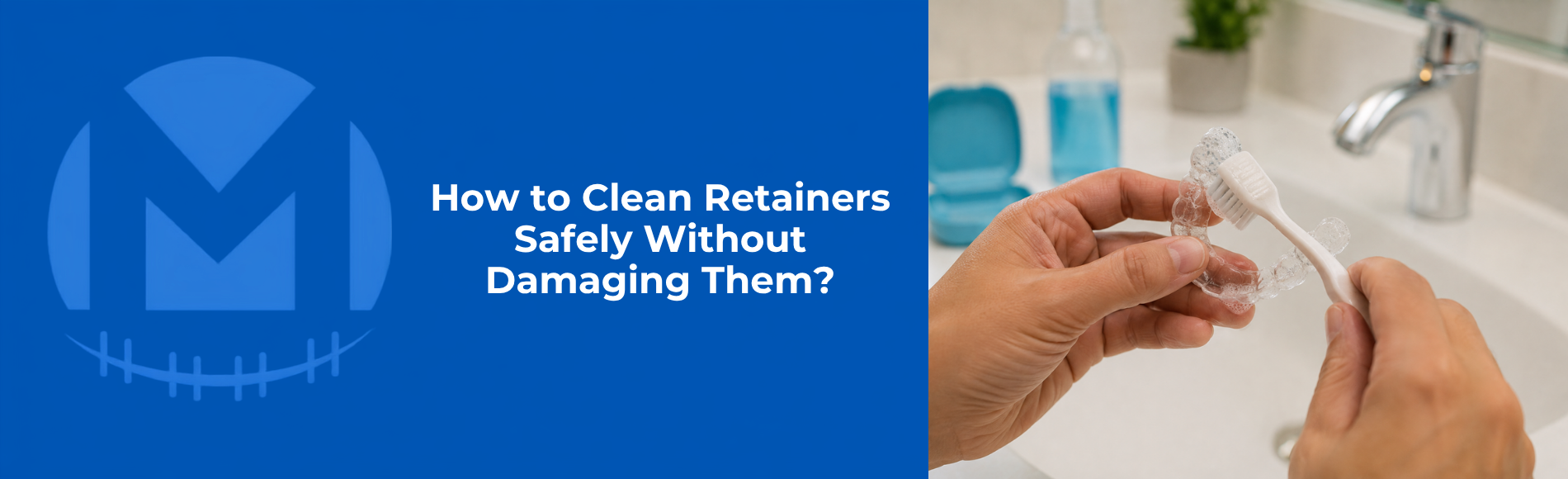
Use a separate soft-bristled toothbrush to gently clean all sides of the appliance. A brush reserved only for the retainer helps prevent toothpaste residue from being transferred onto the material. Pay attention to grooves, wire connections, and areas that fit closely around individual teeth.
Choose a mild, nonabrasive cleanser approved for orthodontic appliances. Some patients can use a small amount of gentle, clear liquid soap, but recommendations may vary based on the retainer material. Rinse the appliance thoroughly before putting it back into your mouth.
Daily cleaning is generally more effective than waiting until the retainer has developed a visible film or odor. Once mineral deposits harden, they can be more difficult to remove without professional guidance.
If your retainer needs a deeper cleaning, your orthodontist may recommend a soaking solution specifically designed for orthodontic appliances. Follow the product instructions carefully, since many cleaners are intended for brief soaking rather than overnight use. Avoid denture cleaners or homemade mixtures unless your orthodontist confirms they are safe for your specific retainer.
Cleaning Mistakes That Can Damage Your Retainer
Many damaged retainers are not the result of normal wear. They are affected by well-intentioned cleaning habits or careless storage.
Common mistakes include:
- Washing a plastic retainer in hot or boiling water
- Scrubbing it with abrasive or whitening toothpaste
- Using bleach, alcohol, or household disinfectants
- Putting a removable retainer in the dishwasher
- Soaking it in colored mouthwash
- Bending or adjusting wires at home
- Leaving it in direct sunlight or a hot vehicle
- Placing it in a pocket without its case
- Wrapping it in a napkin during meals
The napkin habit deserves particular attention. Retainers wrapped in tissues are frequently mistaken for trash at restaurants, school cafeterias, and family gatherings. Put the appliance directly into its ventilated case whenever you remove it.
What to Do About Odors, Stains, or Hardened Buildup
A persistent odor usually indicates that bacteria or plaque remain on the appliance, in the storage case, or both. Clean each thoroughly and review your brushing and flossing routine.
White or chalky deposits may be mineral buildup from saliva. Do not scrape them away with a knife, pin, or other sharp object. Doing so can gouge the material or create rough edges that irritate the mouth.
Yellowing and cloudiness do not always mean a retainer is dirty. Clear plastic changes gradually with use, and scratched material may remain cloudy even after it has been sanitized. If appearance or odor does not improve with approved cleaning, the appliance may need professional evaluation or replacement.
When Should a Retainer Be Replaced?
Even the best-maintained retainer will not last indefinitely. Normal wear, nightly pressure, temperature changes, and repeated handling gradually affect the material.
Contact your orthodontist if you notice:
- Cracks, splits, or holes
- Sharp or rough edges
- A loose or broken wire
- Warping or visible distortion
- A fit that suddenly feels too tight or too loose
- A fixed retainer pulling away from a tooth
- Persistent odor or buildup that cannot be removed safely
Retainers are custom-made appliances. If yours is lost, broken, or no longer fits, arranging a replacement promptly may help prevent unwanted tooth movement. Waiting several weeks can give the teeth time to shift, potentially complicating the replacement process.
Do not force a retainer that no longer seats fully over your teeth. It may be tempting to assume that continued pressure will make it fit again, but the safest response is to contact the orthodontic office for guidance.
Keep Your Retainer Clean and Your Smile Protected
Retainers are a key part of maintaining orthodontic results. They continue working long after braces are removed or the final clear aligner has been completed, which makes proper wear and maintenance essential.
Your routine should also reflect the type of retainer you wear. Essix retainers, Hawley appliances, and permanent lingual wires each have different features and cleaning needs. Personalized guidance from your orthodontic team is more reliable than experimenting with unverified home remedies.
If your retainer is cracked, no longer fits, has developed persistent buildup, or simply needs to be checked, schedule an appointment with Mellion Orthodontics. Prompt attention can help protect the alignment you worked hard to achieve.
FAQs
Can I clean my retainer with toothpaste?
Most toothpastes are too abrasive for plastic retainers and may leave small scratches. Use a mild, orthodontist-approved cleanser instead.
Can I use hot water to sanitize my retainer?
No. Hot or boiling water can warp plastic and change how the appliance fits. Use cool or lukewarm water.
How often should I clean a clear retainer?
Rinse it whenever it is removed and clean it thoroughly at least once each day.
Why does my retainer still look cloudy after cleaning?
Cloudiness may come from mineral buildup or scratches rather than surface dirt. Ask your orthodontist whether it can be cleaned professionally or should be replaced.
What should I do if my retainer no longer fits?
Do not force it into place. Contact your orthodontist promptly so they can evaluate the fit and determine the safest next step.